
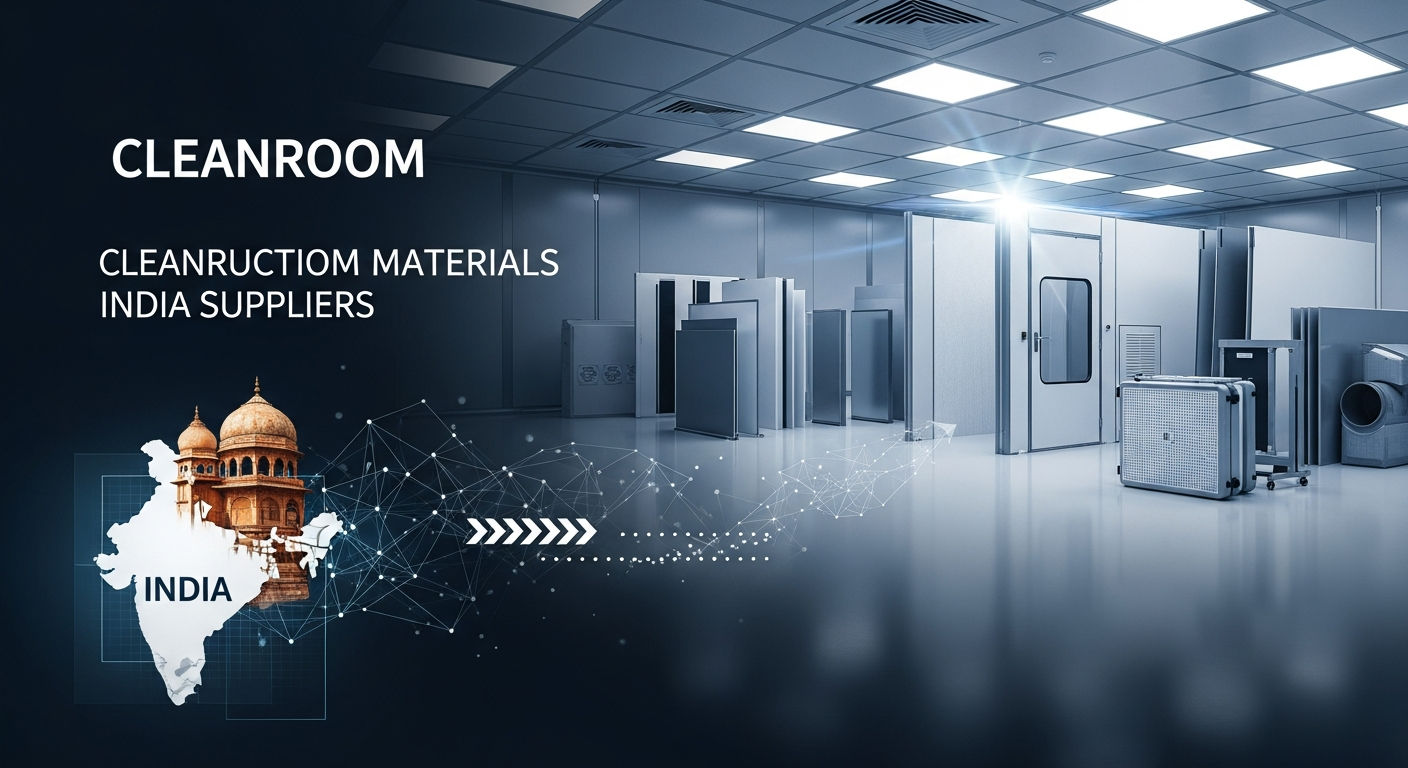
Building a cleanroom in India requires careful selection of specialized construction materials. Choosing the right suppliers for these materials is crucial for ensuring your facility's integrity and preventing costly contamination issues, especially in sensitive sectors like pharmaceuticals and electronics. This guide focuses on identifying reliable Indian suppliers and understanding the critical material classifications and performance criteria that underpin successful cleanroom construction projects. For instance, consider 'MediTech Innovations,' a pharmaceutical company planning a new ISO Class 7 cleanroom for sterile injectable manufacturing in Ahmedabad, Gujarat. They need materials that meet stringent USP Class VI biocompatibility and chemical resistance requirements, focusing on modular wall panels, epoxy flooring, and specialized HVAC components from Indian suppliers that guarantee compliance and long-term durability.
1. Decoding Cleanroom Material Classifications by ISO and Industry Standards
Cleanroom materials are not just generic building supplies; they are critical components dictating air purity and contamination control. Their selection is guided by globally recognized standards like ISO 14644 and specific industry mandates such as FDA, USP, and GMP. Choosing appropriate materials from Indian suppliers is, as they directly impact your facility's ability to meet stringent cleanroom classes and prevent expensive contamination events.
Understanding ISO Cleanroom Classes and Material Requirements
The ISO 14644 standard series classifies cleanroom air cleanliness from ISO Class 1 (ultra-clean) to ISO Class 9 (least clean) based on particle counts per cubic meter. For example, an ISO Class 1 cleanroom permits only 10 particles of 0.1 μm or larger per cubic meter. Achieving these classes necessitates construction materials that minimize particle shedding and withstand rigorous cleaning protocols. Modular cleanrooms, often constructed from materials like aluminum, steel, or pre-painted galvanized iron (PPGI), are a common solution. A typical ISO 6 modular cleanroom, featuring 60 mm panels and epoxy flooring, can represent a significant investment, with costs often ranging from ₹1,00,000 to ₹2,00,000 per unit depending on specifications.
Industry-Specific Standards: Pharma, Biotech, Electronics, and Food
Beyond ISO, specific industries impose unique material requirements. Pharmaceutical and biotech facilities frequently need materials compliant with FDA and USP standards to prevent interaction with sensitive products, and GMP materials are essential. For electronics cleanroom materials, minimizing static discharge and particle generation is critical to protect delicate components. Food processing cleanrooms demand materials that are easily sanitized and resist microbial growth. Companies like Accumax India demonstrate their capability to manufacture cleanrooms to various ISO classifications, including Class 4, catering to these diverse sector needs. The global cleanroom construction market is substantial, driven by these specialized industry demands.
2. Core Cleanroom Construction Materials: Beyond the Panel
Building a cleanroom involves assembling a sophisticated system where every material contributes to environmental control. This section details the fundamental components of a functional cleanroom, from modular panels and airtight adhesives to specialized flooring and lighting, crucial for selecting the right cleanroom construction materials from India.
Modular Panels: Sandwich, Monolithic, and Composite Options
Modular panels form the foundation of most modern cleanrooms, offering flexibility and speed in construction. They typically comprise an insulation core enclosed by two skins.
Pre-Coated Galvanized Iron (PCGI) Panels: These common panels feature a galvanized iron core for strength, with a durable, easy-to-clean coating. Insulation cores like Polyurethane Foam (PUF), Polyisocyanurate Foam (PIR), or Rockwool provide thermal and acoustic properties. Prominent suppliers of these systems include MK Clean Room Project Pvt. Ltd. and Alfaa Panels.
Stainless Steel Panels: For highly critical environments, stainless steel panels (typically 0.8 mm to 1.2 mm thick) offer superior corrosion resistance and cleanability, albeit at a higher cost.
High-Pressure Laminate (HPL) Panels: These 3mm thick panels provide a durable, non-porous surface suitable for many cleanroom applications.
Adhesives & Sealants: Ensuring Airtight Integrity and Durability
Achieving airtightness is in cleanroom design, making the right adhesives and sealants essential for preventing particle ingress and maintaining pressure differentials.
Cleanroom Adhesives: Specially formulated adhesives bond panel skins to core materials and join panels, ensuring strong, non-outgassing, and easily cleanable connections.
Cleanroom Sealants: Flexible sealants, often silicone- or polyurethane-based, are applied at all joints, seams, and penetrations to create an airtight seal and prevent air leakage.
Doors and Windows: These are designed for flush mounting with wall panels, minimizing ledges. Frames are typically extruded aluminum, galvanized steel, or stainless steel, with door leaves around 44 mm thick, built for airtight closure.
Cleanroom Flooring: Anti-static vinyl, epoxy, or specialized rubber flooring systems offer durable,, and easy-to-sanitize surfaces that help dissipate static electricity.
3. Essential Supporting Components: HVAC, Lighting, and Utilities
Beyond the primary construction materials, cleanrooms rely on specialized supporting systems like HVAC, lighting, and utilities. These are integral for particle control, operational efficiency, and meeting stringent industry standards, functioning as the cleanroom's circulatory and nervous systems.
Cleanroom HVAC Components: HEPA/ULPA Filters, Diffusers, and Airflow Control
HEPA/ULPA Filters: These are the primary air purifiers, designed to capture microscopic particles and prevent contamination. Benaka Clean Room Construction Services is one example of a company that integrates these advanced filters.
Diffusers: Cleanroom diffusers ensure even air distribution, preventing turbulent airflow that can dislodge particles.
Airflow Control: Precise control over airflow is critical. Cleanroom HVAC systems increase air supply for high air change rates and maintain positive pressurization, guiding air from cleaner to less clean areas. Advanced HVAC units can be a substantial investment.
Specialized Cleanroom Lighting Systems: LED, Fluorescent, and Fixture Design
LED Lighting: Sealed LED lights, often recessed and designed for easy cleaning, are favored for their longevity and energy efficiency. Some specialized fittings can last up to 50,000 hours, with lighting typically consuming a small fraction of a cleanroom's total energy.
Fluorescent Lighting: Specialized fluorescent lights, designed for minimal particle generation and ease of cleaning, are also utilized.
Fixture Design: Cleanroom light fixtures must be sealed and resistant to dust and moisture to prevent contamination and simplify cleaning. Major suppliers like Instec India and Lemis Electronics India Pvt. Ltd. offer these specialized designs.
4. Why Do Material Choices Matter for Cleanroom Performance?
The selection of materials for your cleanroom directly impacts its ability to maintain a controlled environment, affecting product quality and regulatory compliance. These materials actively prevent contamination, manage static electricity, and ensure the facility's longevity, contributing to overall operational integrity.
Evaluating Durability, Cleanability, and Chemical Resistance
Durability: Materials must withstand rigorous cleaning protocols and consistent foot traffic common in cleanroom environments. Durable options reduce replacement frequency and long-term particle generation.
Cleanability: Surfaces must be smooth and non-porous to prevent particle adherence and allow for effective decontamination. A smooth, sealed surface is far easier to clean than a textured one, which is crucial for maintaining hygiene standards.
Chemical Resistance: Materials must resist degradation from cleaning agents and sanitizers. For instance, chemical-resistant flooring prevents pitting and breakdown, maintaining its effectiveness and particle-free status.
Static Control (ESD) and Material Selection for Sensitive Environments
Selecting appropriate Electrostatic Discharge (ESD) protective materials is essential when working with sensitive electronics or pharmaceuticals. Improper materials can lead to electrostatic discharge, potentially damaging delicate components or disrupting sensitive processes. Static control is a fundamental requirement in many cleanroom applications. The Indian cleanroom market is increasingly offering specialized materials to address these issues, particularly for the electronics sector, highlighting the growing demand for advanced solutions.
5. Top Cleanroom Construction Materials Suppliers in India
Finding reliable cleanroom construction materials India suppliers is key for any controlled environment project. This section highlights prominent companies across India, categorized by region, to help streamline your search for quality materials and thorough solutions.
Panel and Modular System Suppliers: North & West India
Major suppliers of panel and modular systems, essential for a cleanroom's primary structure, are concentrated in North and West India. These companies often provide complete wall and ceiling panel solutions with integrated insulation and finishes suitable for various cleanroom classes, utilizing materials like steel, aluminum, and composites. HPL or PVC-faced panels, valued for their ease of cleaning, are frequently offered. Leading suppliers can often be found through B2B platforms like IndiaMART and TradeIndia.
Flooring, Sealants, and Component Suppliers: South & East India
Specialized suppliers in South and East India offer critical components such as flooring, sealants, and HVAC systems. Cleanroom flooring suppliers provide durable options like epoxy, vinyl, or rubber, engineered for rigorous cleaning and static control. Dedicated cleanroom HVAC suppliers in India offer essential equipment like air showers, HEPA filters, and ventilation units. Sealants and adhesives are also crucial, and numerous cleanroom suppliers in India can fulfill these diverse material requirements.
6. Case Study: Pharmaceutical Cleanroom Build in Gujarat
This case study examines a recent pharmaceutical cleanroom project in Gujarat, illustrating how specific cleanroom construction materials India suppliers were selected to meet stringent pharmaceutical regulations and address common construction challenges. It details the material selection process and the crucial supplier partnerships that ensured the project's compliance and performance.
Project Overview: Gujarat Pharma Facility Requirements
The Gujarat cleanroom project necessitated strict adherence to USP and GMP regulations. This demanded materials capable of not only containing substances and controlling airflow but also preventing particle shedding and chemical contamination. The facility required ISO Class 7 cleanroom spaces for its formulation and packaging sections, like those 'MediTech Innovations' plans for their Ahmedabad facility.
Material Selection & Supplier Partnership for Compliance and Performance
Selecting cleanroom construction materials India suppliers for this pharma cleanroom project involved a critical, multi-step process:
Initial Material Scoping: Based on USP-compliant material needs, the project team identified key material types: modular wall and ceiling panels, specialized flooring systems, high-performance sealants, and integrated HVAC and lighting components.
Supplier Vetting: Several cleanroom suppliers in India were evaluated based on product certifications, manufacturing quality, technical support, and prior experience with GMP cleanrooms.
Material Specification & Testing: Detailed specifications were developed for each material, emphasizing particle-shedding resistance, chemical resistance, and ease of cleaning. Samples were subjected to project-specific testing.
Partnership Establishment: A primary supplier was chosen for modular panels, complemented by secondary suppliers for epoxy flooring and specialized sealants. This strategic partnership ensured consistent material quality and timely delivery, vital for project scheduling. The selected suppliers demonstrated a strong understanding of GMP cleanroom construction demands.
7. Key Takeaways for Sourcing Cleanroom Materials in India
Prioritizing compliance and material certifications is essential when sourcing cleanroom materials in India. Thoroughly vetting suppliers for reliability, quality, and after-sales support is crucial. Consider the long-term operational impact of material choices beyond upfront costs. Factor in local supply chain realities and realistic lead times during project planning. Opting for integrated solutions from suppliers can streamline installation and ensure a cohesive build.
Frequently Asked Questions About Cleanroom Construction Materials
What are the main materials used in cleanroom construction?
The primary materials include modular wall and ceiling panels, often made from pre-coated steel or aluminum with particle-minimizing cores. Specialized vinyl, epoxy, or polyurethane flooring systems are critical for creating smooth, durable, and easily sanitizable surfaces. Adhesives, sealants, and gaskets are also vital for maintaining airtightness.
What distinguishes a cleanroom construction company's role?
A cleanroom construction company manages the entire project lifecycle, from design and material selection to installation and certification. Their expertise ensures that the facility meets strict industry standards and performs as intended, contributing significantly to the overall cleanroom construction cost in India.
What are the different types of cleanrooms based on application?
Cleanrooms vary by application, including pharmaceutical (ISO Class 5-8), electronics (Class 100-1000), biotech, and aerospace. Each type requires specific materials and construction methods to effectively control contamination according to its unique operational needs, guiding the selection of appropriate cleanroom materials.
How do material costs impact the overall cleanroom budget in India?
Material expenses are a significant driver of the total cleanroom construction cost in India. High-performance, durable, and contamination-controlling materials often have higher upfront costs but can lead to long-term savings in operations and maintenance. A reputable cleanroom company helps balance initial investment with long-term value.
The Bottom Line
When sourcing cleanroom construction materials in India, a strategic approach that blends technical understanding with careful partner selection is essential. Choosing the right components and dependable suppliers ensures your controlled environment meets stringent standards and functions effectively over time. Your material choices are an investment in your facility's future performance and compliance.