
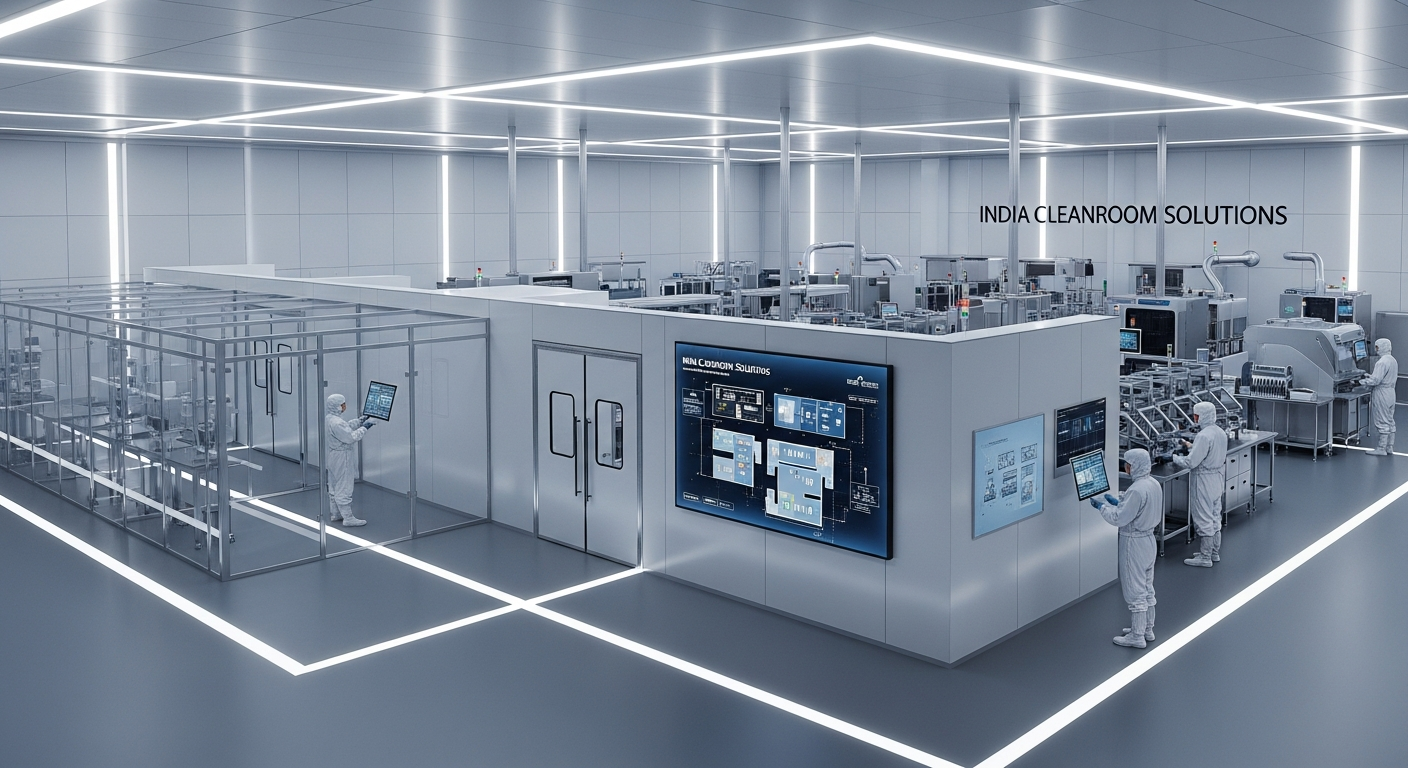
Selecting the right cleanroom design layout manufacturer in India involves more than just comparing technical specifications; it requires understanding a partner's process, regulatory adherence, and ability to translate specific operational needs into a compliant, efficient space. India offers a strong market of specialists capable of building environments critical for sectors like pharmaceuticals, electronics, and biotech. This guide helps you navigate the selection process, ensuring you find a partner who grasps your unique requirements and India's stringent regulations, making your cleanroom project a success from the outset. Consider MediTech Innovations, a mid-sized Indian pharmaceutical company aiming to expand its sterile injectable production. They require a new ISO Class 7 cleanroom. Throughout this guide, we will follow MediTech's journey, from understanding basic layout requirements and regulatory standards to scrutinizing potential Indian manufacturers like GMP Technical Solutions and Integrated Cleanroom Technologies, ensuring their chosen facility is validated and ready for operation.
What is Cleanroom Design and Layout?
Cleanroom design and layout are the fundamental plans for environments where contamination is meticulously controlled. These strategic arrangements focus on optimizing airflow, material flow, and personnel movement to prevent particles from compromising sensitive processes. This detailed planning is vital for manufacturers in India, considering the country's diverse environmental conditions and the need to meet strict industry standards like ISO and GMP.
Core Components of a Cleanroom Layout
Designing an effective cleanroom layout involves several critical elements to build a controlled ecosystem.
- Requirement Analysis: Pinpoint the exact contamination control needs for your operation. What cleanliness level is non-negotiable? This dictates all subsequent decisions.
- Layout Planning: Map the physical space based on the analysis, detailing equipment placement, material entry/exit points, and personnel paths. The goal is to minimize turbulence and particle generation, ensuring every movement is deliberate.
- Airflow Management: This is crucial. Cleanrooms utilize directed airflow, often unidirectional (laminar) from ceiling to floor, to sweep contaminants away. Manufacturers must specify correct air changes per hour (ACH) and filter types, such as HEPA filters, which trap at least 99.97% of 0.3-micron particles.
- Material & Personnel Flow: A well-designed layout ensures materials and people move through defined entry points and airlocks, preventing cross-contamination between zones of differing cleanliness.
- Modular Design Integration: Many Indian manufacturers integrate modular systems. These partitions and ceiling grids allow for flexibility, easier installation, and future expansion without major structural changes, much like building with advanced components.
Understanding ISO & GMP Standards in India
Adhering to international standards is critical for cleanroom manufacturers in India, particularly those serving the pharmaceutical, biotech, and electronics sectors.
- ISO Standards: These define permissible particle counts in a given air volume. For instance, ISO Class 7 requires no more than 352,000 particles of 0.5 µm per cubic meter. Higher ISO classes (lower numbers) signify stricter control. The Indian cleanroom technology market is expanding, reflecting the demand for compliant facilities.
- GMP Standards: Good Manufacturing Practices are, especially for pharmaceutical production. GMP ensures products are consistently produced and controlled according to quality standards. This demands strict control over the cleanroom environment, including temperature (often 22 ± 2 °C) and humidity (e.g., 45 ± 5%), alongside particle counts and air quality. For MediTech Innovations, meeting GMP standards is non-negotiable for its sterile injectable production. Manufacturers like Chemietron Clean Tech and ARC Clean Air Solutions focus on delivering solutions that meet these precise specifications.
Why India is a Hub for Cleanroom Manufacturing
India's emergence as a cleanroom manufacturing hub is driven by economic advantages, a skilled workforce, and a commitment to global standards, making it a compelling choice for companies seeking reliable and cost-effective cleanroom solutions. The Indian cleanroom technology market, valued at approximately $281 million in 2024, is projected to reach over $445 million by 2030, showcasing its rapid growth.
Cost Advantages and ROI for Indian Cleanrooms
The primary draw for many clients is cost-effectiveness. India offers competitive pricing on cleanroom components and services, directly contributing to a better return on investment (ROI). You can achieve high quality without exorbitant expense.
- Component Pricing: Essential items like dispensing and sampling booths, along with laminar airflow workstations, are often available at competitive price points, delivering high-efficiency filtration for critical applications.
- Modular Panels: Substantial components like 80mm thick modular cleanroom panels can be sourced economically, reflecting the overall cost advantage.
- Turnkey Solutions: Leading manufacturers in India, such as GMP Technical Solutions Pvt. Ltd., provide thorough turnkey projects, integrating various elements for streamlined, cost-effective builds.
Skilled Workforce and Technical Expertise in India
Beyond price, India's strength lies in its large, technically skilled workforce adept at meeting the precise demands of cleanroom manufacturing, ensuring expertise backed by practical experience.
- Specialized Talent: India possesses a deep pool of engineers and technicians experienced in precision manufacturing, crucial for creating controlled environments that adhere to standards like ISO 14644 and cGMP.
- Regulatory Compliance: This skilled labor ensures manufacturers understand and can implement the strict regulatory compliance required for pharmaceutical, biopharmaceutical, and semiconductor industries.
- Industry Growth: The burgeoning pharmaceutical (valued significantly and projected for substantial growth) and biotechnology sectors further cultivate this expertise, driving demand for advanced cleanroom solutions. The focus on semiconductor hubs also necessitates and develops this specialized technical knowledge.
Choosing the Right Cleanroom Manufacturer in India: A Buyer's Checklist
Selecting a cleanroom manufacturer in India involves looking beyond price to find a partner who understands your operational needs and can deliver a compliant, effective cleanroom. This checklist aids in due diligence for a smart choice that supports your business.
Essential Questions for Manufacturer Selection
When evaluating potential cleanroom manufacturers in India, seek a partner committed to your success. The best manufacturers will ask insightful questions, demonstrating their understanding of your needs.
- What industries have you worked in most? Manufacturers with deep experience in your specific field (e.g., pharmaceuticals for MediTech Innovations) can offer better designs and fewer surprises.
- Walk me through your cleanroom design and layout process. Understand their methodology from initial consultation through to installation, ensuring alignment on deliverables and timelines.
- How do you ensure compliance with ISO 14644 and relevant GMP standards? Look for clear documentation and demonstrable processes for adhering to critical rules. For MediTech, demonstrating adherence to pharmaceutical GMP is vital.
- What is the typical timeline for a project like mine? This helps in your own scheduling and operational planning.
- What warranty and after-sales support do you provide? A solid warranty and accessible support are essential for long-term operational continuity.
Evaluating Manufacturer Track Record and Case Studies
A manufacturer's past performance is a strong indicator of future capabilities. Thoroughly vet their history.
- Request detailed case studies: Examine projects similar to yours in scope, industry, and complexity. Understand the problems they solved and the outcomes achieved.
- Ask for client references: Direct conversations with past clients offer genuine insight into reliability, communication, and build quality.
- Check certifications and accreditations: Ensure the manufacturer holds relevant industry certifications and that their staff are properly trained, signifying adherence to stringent standards.
- Assess their understanding of cleanroom technology: Do they confidently discuss materials, HVAC, airflow patterns, and sealing methods? For instance, knowing the difference between PUF and Rockwool core sandwich panels and their applications demonstrates technical skill.
How Do Indian Manufacturers Approach Cleanroom Design?
Indian cleanroom manufacturers typically follow a structured process, starting with concept validation and progressing to detailed technical plans. They emphasize modularity, adhere to international standards like ISO 14644, and utilize custom environmental controls tailored to specific industry needs, such as those for pharmaceuticals or electronics. This methodical approach ensures the final cleanroom design layout is functional and compliant.
Concept Planning and Feasibility Studies
- Client Consultation: Discuss project goals, required ISO classification, specific industry needs (like pharmaceutical sterility for MediTech), and budget constraints.
- Site Assessment: Evaluate the proposed location, considering existing infrastructure, space limitations, and potential challenges.
- Feasibility Analysis: Determine technical viability, including initial airflow calculations, material compatibility checks, and identification of any compliance issues.
- Preliminary Budgeting: Provide an initial cost estimate based on the concept and anticipated work.
Detailed Engineering and Layout Schematics
- Architectural & Engineering Design: Create detailed blueprints and schematics for the cleanroom, defining dimensions, layouts, and structural requirements. This stage is crucial for ensuring all components integrate smoothly.
- HVAC System Design: Engineer the Heating, Ventilation, and Air Conditioning (HVAC) system, with precise calculations for airflow, filtration (HEPA/ULPA), temperature, humidity control, and pressure differentials.
- Material Specification: Select appropriate building materials (e.g., HPL, powder-coated GI, stainless steel) based on cleanroom class, durability, cleanability, and safety requirements.
- Equipment Integration Plan: Strategize the placement and connection of essential cleanroom equipment like pass boxes, air showers, and laminar flow units.
- Final Layout and Documentation: Produce thorough layout drawings and technical documents for client approval before manufacturing commences. This becomes the definitive blueprint for the cleanroom design layout India manufacturers will construct.
Cleanroom Design for Pharmaceutical Manufacturing in India
Designing cleanroom facilities for India's pharmaceutical sector involves stringent requirements extending beyond basic particle control, aiming for sterile environments for aseptic processing. This focus on sterility and rigorous validation differentiates pharma cleanrooms, directly impacting product safety and regulatory approval within the Indian pharmaceutical industry.
Sterility and Aseptic Processing Requirements
Achieving and maintaining sterility is for pharmaceutical cleanrooms in India. Every design element, from air filtration systems (using HEPA or ULPA filters) to material choices for surfaces, must prevent microbial growth. Aseptic processing requires an environment where sterile products are handled without recontamination. Key design features include unidirectional airflow, controlled pressure differentials between zones, and specific gowning protocols for personnel.
Validation and Qualification for Pharma Cleanrooms
The validation and qualification process for pharmaceutical cleanrooms in India is a regulatory mandate from bodies like India's Central Drugs Standard Control Organization (CDSCO). Documented testing and ongoing monitoring must demonstrate consistent adherence to design and operational specifications. This validation covers particle counts, air change rates, temperature, humidity, and pressure differences. For MediTech Innovations, strong validation is crucial for market approval. Without it, the cleanroom is non-compliant.
Designing for Advanced Electronics Manufacturing in India
Designing a cleanroom for advanced electronics manufacturing in India requires meticulous attention to controlling electrostatic discharge (ESD) and minute particulate contamination. The goal is a highly controlled space where even a tiny particle or electrical zap can damage sensitive components.
ESD Protection Strategies
Preventing ESD damage to sensitive electronics is critical in India's electronics manufacturing hubs, necessitating a static-dissipative environment.
- Flooring: Install static-dissipative or conductive flooring to safely channel static charges from people and equipment.
- Grounding: Ensure all equipment, workstations, and personnel are properly grounded using wrist straps, heel grounders, and common grounding points.
- Ionizers: Employ ionizers at workstations to neutralize static charges on non-conductive materials like plastic packaging.
- Materials: Select ESD-safe materials for furniture, containers, and personnel attire within the cleanroom.
Controlling Micro-Contamination in Semiconductor Fabrication
Semiconductor manufacturing is exceptionally sensitive, where particles smaller than a micron can cause defects. Controlling micro-contamination is vital for cleanroom design layout in India's semiconductor facilities.
- Air Filtration: Utilize high-efficiency particulate air (HEPA) or ultra-low particulate air (ULPA) filters to achieve extremely low particle counts.
- Airflow: Design airflow patterns, often laminar, to sweep particles away from critical areas towards exhausts.
- Material Selection: Use low-particle-generating and low-gas-emitting materials like stainless steel, specific plastics, and specialized coatings.
- Process Control: Implement strict protocols for material handling, equipment cleaning, and cleanroom attire donning to prevent contaminant introduction. IMARC Engineering data highlights the need for specialized cleanroom and cold chain design services in India to meet stringent rules, particularly for the electronics sector.
Modular vs. Traditional Cleanroom Construction in India
When building a cleanroom in India, the choice is between modular systems—pre-fabricated components assembled on-site for speed and flexibility—and traditional, site-built structures offering deep customization but typically requiring more time and resources.
Benefits of Modular Cleanrooms for India
- Speed: Modular cleanrooms significantly reduce project timelines as components are built off-site, allowing for rapid on-site installation.
- Flexibility: These systems are easily adaptable; cleanroom layouts can be modified or expanded without major structural work, ideal for India's manufacturing environments.
- Cost-Effectiveness: While initial material costs may be comparable, modular options often prove more economical due to reduced labor, less downtime, and faster operational readiness.
- Minimal Disruption: Off-site fabrication minimizes dust, noise, and operational interruptions on the production floor.
When Traditional Construction is Necessary
- Extreme Customization: For highly unique or unusually shaped spaces where standard modular panels don't fit, traditional construction offers complete design freedom.
- Permanent, Heavy Infrastructure: If the cleanroom layout requires strong support for massive, permanent machinery, traditional builds might offer superior long-term stability.
- Budget Constraints (Upfront): If immediate capital expenditure is a significant concern, traditional construction may allow for phased development that aligns better with cash flow, though long-term costs can be higher.
- Remote Locations: Transporting large modular components to remote areas in India can be challenging and costly, making on-site construction a more practical choice.
Key Innovations in Cleanroom Technology
Contemporary cleanroom technology focuses on enhanced control, efficiency, and data-driven decision-making. Innovations include real-time monitoring, intelligent environmental controls, and advanced air purification systems designed for demanding industries like pharmaceuticals and microelectronics. These advancements are reshaping how cleanroom design layout India manufacturers approach projects.
Smart Monitoring and IoT Integration
IoT integration transforms cleanrooms into smart, responsive environments. Sensors continuously monitor critical parameters like temperature, humidity, pressure, and particle counts, feeding data to central dashboards for instant alerts and automatic adjustments. This predictive capability helps anticipate maintenance needs, minimizing downtime.
Next-Generation Filtration and Airflow Systems
Beyond HEPA, advanced filtration includes ultra-low penetration air (ULPA) filters and novel materials offering improved performance and longevity. Smarter airflow systems dynamically adjust based on occupancy and activity, optimizing air quality and energy usage—a significant upgrade from static designs.
Profiles of Leading Indian Cleanroom Manufacturers
Choosing a cleanroom manufacturer in India necessitates evaluating their track record and specific expertise. The following profiles highlight prominent Indian cleanroom providers, showcasing their capabilities and project specializations. Examining their past work offers valuable insight into their experience with cleanroom design and layout.
Spotlight on GMP Technical Solutions Pvt. Ltd. GMP Technical Solutions is a key player among Indian cleanroom manufacturers, renowned for delivering thorough cleanroom solutions from concept to commissioning. They ensure projects meet stringent regulatory standards across various industries requiring controlled environments.
Spotlight on Integrated Cleanroom Technologies Pvt. Ltd. (iCLEAN)
iCLEAN distinguishes itself with new cleanroom design and modular solutions. They construct bespoke cleanroom facilities tailored to specific client needs, prioritizing energy efficiency and scalability. Their focus on integrated solutions makes them a strong candidate for complex cleanroom projects. These examples represent just a fraction of India's capable cleanroom manufacturers. Investigating their specific project portfolios and unique strengths is essential for finding the best fit for your cleanroom design layout needs.
Understanding Cleanroom Installation and Validation Services
Cleanroom installation and validation services are the crucial final stages, ensuring the controlled environment meets design specifications and regulatory requirements. These services prove the cleanroom functions as intended. Manufacturers in India provide these to guarantee compliance and operational readiness.
The Installation Process: What to Expect
- Site Preparation: Clearing the area, ensuring access, and setting up necessary utilities.
- Module Assembly: Constructing the modular structure, including walls, ceilings, and flooring.
- HVAC and Utility Integration: Installing HEPA/ULPA filters, air handling units, and integrating services like power, data, and gas.
- Finishing Touches: Adding doors, windows, pass-throughs, lighting, and specialized equipment.
- Initial System Checks: Performing basic functional tests on all systems before formal validation.
Validation: Ensuring Performance and Compliance
Cleanroom validation is mandatory, particularly for industries like pharma and biotech requiring strict GMP validation. It provides documented proof that the cleanroom consistently operates within defined parameters.
- Initial Qualification (IQ): Verifying that all equipment and components are installed correctly according to design specifications.
- Operational Qualification (OQ): Testing cleanroom systems to ensure reliable operation within specified ranges, covering airflow, pressure differences, temperature, and humidity controls.
- Performance Qualification (PQ): Simulating actual operating conditions to confirm the cleanroom consistently maintains the required cleanliness class under real-world conditions. For MediTech Innovations, successful PQ is essential for regulatory acceptance.
- Certification: Issuing formal documentation confirming the cleanroom meets all standards and regulatory needs, often including particle counts, air change rates, and pressure cascades.
Cost Factors in Cleanroom Design and Layout in India
Understanding the primary cost drivers for any cleanroom design layout India project is essential. These typically include high-grade materials, specialized equipment, labor, design complexity, and regulatory compliance overhead.
Material and Equipment Costs
High-purity materials for walls, floors, and ceilings that meet specific standards and minimize particle shedding significantly impact manufacturing costs. Advanced HVAC systems for precise temperature, humidity, and air change control represent a substantial investment. Furthermore, HEPA and ULPA filters, crucial for air purity, are a recurring expense due to their limited lifespan.
Design Complexity and Regulatory Overhead
Specialized cleanrooms, such as those for pharmaceutical or semiconductor applications, require complex layouts and custom solutions, increasing design and layout costs. Adhering to industry standards like ISO or GMP and undergoing rigorous validation and certification processes adds considerable expense and necessitates expert consultation. Project management, coordinating specialized contractors and timelines while adhering to strict rules, further contributes to the overall cost.
Future Outlook for Cleanroom Design in India
India's cleanroom design and manufacturing sector shows strong future prospects, with anticipated growth in specialized facilities and increased automation. Market expansion is linked to global supply chain adjustments and India's ongoing industrial development.
Emerging Industries Driving Demand
High-growth sectors are propelling demand for cleanroom design layout India manufacturers. Pharmaceuticals and biotechnology continue to be major drivers, requiring stringent contamination control. The semiconductor industry, with its push for domestic production, presents a significant opportunity. Additionally, the expanding medical device sector and advancements in food processing facilities are creating new markets for cleanroom solutions, each with unique requirements pushing manufacturers toward innovation.
Technological Advancements Shaping the Future
Technological advancements will redefine cleanroom design and manufacturing in India. Expect a greater prevalence of modular cleanroom systems for quicker setup and enhanced flexibility. The integration of IoT sensors for real-time environmental monitoring will become standard, providing valuable data for process optimization. Artificial intelligence will likely play a role in design simulations and predictive maintenance for cleanroom systems. These shifts point towards future Indian cleanroom facilities being smarter, more adaptable, and more efficient, with data analytics and automation central to operations.
Frequently Asked Questions About Cleanroom Design Layout India
Selecting the right cleanroom manufacturer in India involves understanding project timelines, regulations, and long-term needs. This FAQ addresses common questions regarding cleanroom design and layout from India-based manufacturers.
What's the usual lead time for a custom cleanroom project in India?
Typically, the lead time ranges from 8 to 16 weeks from design finalization to installation completion. This timeframe can vary based on project complexity, the required cleanroom class, and the manufacturer's current workload. Modular builds often expedite this process compared to traditional construction.
How do I ensure my cleanroom design meets Indian industry rules?
Close collaboration with your chosen manufacturer is key. Select partners with proven experience in your specific industry who are knowledgeable about Indian standards (like IS 14792) and international benchmarks (such as ISO 14644), and who can provide documented proof of compliance.
What maintenance does a cleanroom built by an Indian manufacturer need?
Regular cleaning, periodic HEPA filter checks, and ongoing monitoring of airflow and pressure are standard. Manufacturers usually provide recommended maintenance schedules and may offer service contracts to ensure the ongoing optimal performance of your cleanroom design layout.
Can Indian manufacturers perform cleanroom retrofits and upgrades?
Yes, many Indian manufacturers specialize in retrofitting and upgrading existing cleanroom facilities. They assess current setups, identify areas for improvement, and implement changes to meet new regulations or achieve higher cleanroom classifications, often integrating modular components to minimize disruption.
What kind of warranty do Indian cleanroom manufacturers typically offer?
Warranties usually cover defects in materials and workmanship, often extending for one to two years on the structure and primary components. Specific equipment warranties, such as those for HEPA filters or HVAC systems, may vary based on the original component manufacturer. Always obtain warranty details in writing.
Key Takeaways for Selecting an Indian Cleanroom Manufacturer
Choosing the right cleanroom manufacturer in India hinges on several critical factors crucial for project success and compliance. Prioritize manufacturers with proven expertise specifically in cleanroom design and layout, rather than general construction. Your partner must thoroughly understand the regulatory requirements pertinent to your industry.
- Seek manufacturers with demonstrated experience in specialized cleanroom design and layout.
- Verify their comprehension of regulatory compliance specific to your sector.
- Review their project history and client testimonials.
- Confirm their ability to offer thorough, end-to-end cleanroom solutions.
- Ensure they provide strong post-installation support and validation services.
The Bottom Line
Selecting your cleanroom design layout India manufacturer is a significant decision impacting operational efficiency, compliance, and future growth. It’s about building a partnership that ensures regulatory adherence and supports your long-term objectives. The key takeaway is to approach this selection process with diligence, focusing on your specific needs and the manufacturer's capabilities. Thoroughly investigate potential partners, examining their past projects and quality control processes. Begin your due diligence by drafting a detailed request for information, incorporating the essential questions discussed in this guide.