
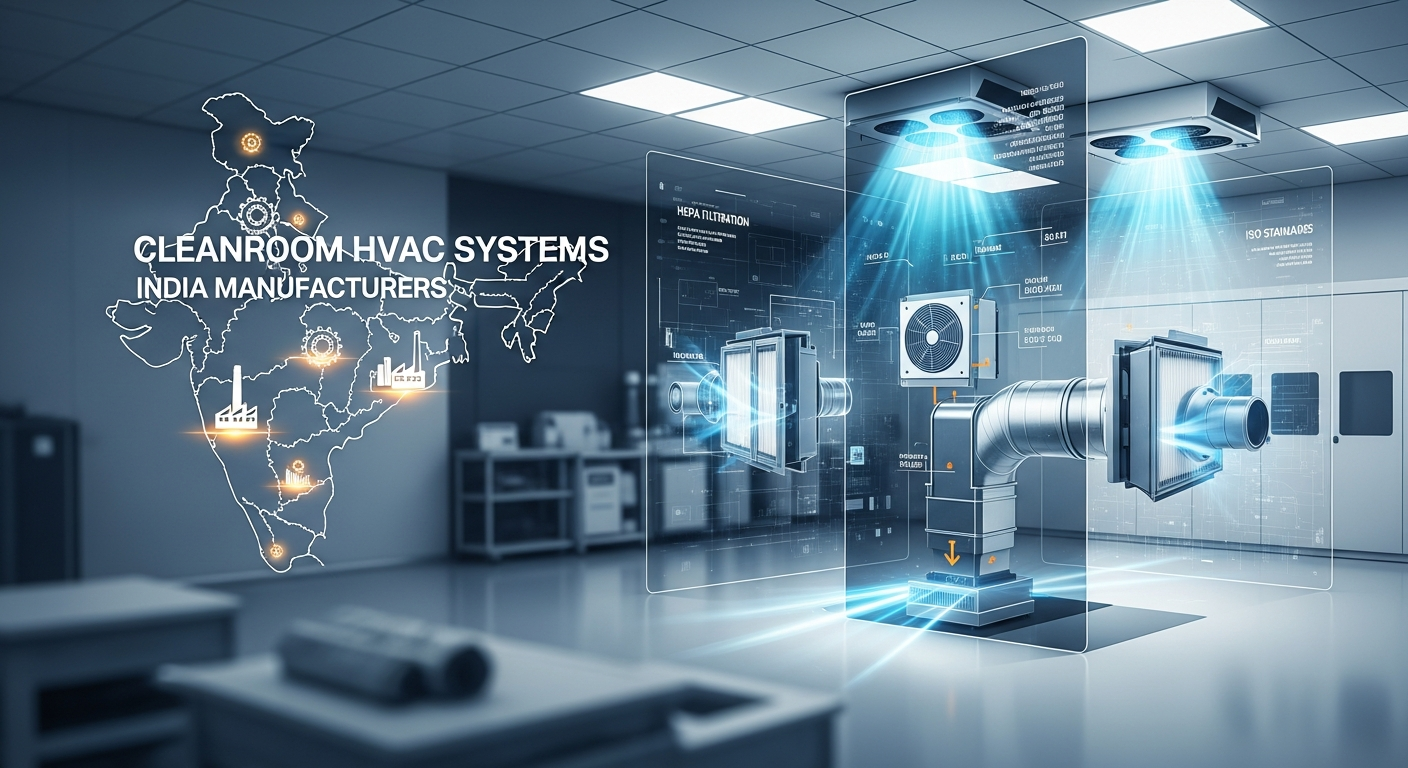
When considering cleanroom construction in India, a common misconception is that any sealed room with filtered air will suffice. However, this approach is a recipe for disaster. Cleanroom HVAC systems in India are the specialized backbone for creating precisely controlled environments, essential for industries ranging from life-saving pharmaceuticals to microchip fabrication, especially within India's unique industrial climate. These systems are meticulously engineered to manage air quality, temperature, and humidity, thereby preventing contamination and ensuring both product integrity and regulatory compliance. Partnering with the right India manufacturers who understand your specific needs is a strategic decision that impacts operational efficiency, product yield, and long-term regulatory adherence. This guide will illuminate the path to identifying top-tier cleanroom HVAC manufacturers in India, helping you build a facility that doesn't just meet standards, but excels.
Understanding Cleanroom HVAC Fundamentals for Indian Operations
Cleanroom HVAC systems for Indian operations are far more than standard air conditioning units. They are sophisticated systems designed to meticulously control particles, temperature, humidity, and pressure, ensuring adherence to strict cleanliness regulations vital for sensitive manufacturing and research. These specialized setups are critical for safeguarding product integrity and experimental accuracy in demanding fields like pharmaceuticals and electronics, forming the cornerstone of compliance with Indian cleanroom standards.
Key HVAC Parameters for Cleanroom Integrity
Several precise HVAC factors are critical for maintaining a cleanroom's integrity. Air Changes per Hour (ACH) is; it dictates how many times the room's air is fully replaced each hour. A Class 100 cleanroom might aim for 30-80 ACH, though some specialized applications can require up to 600 ACH to efficiently purge contaminants. Filtration is equally vital, with HEPA filters being standard, capable of capturing 99.9997% of particles down to 0.3 microns. For even greater purity, ULPA filters are employed. Pressure differentials are also crucial; positive pressure actively pushes air out of the cleanroom, preventing the ingress of unfiltered external air. Maintaining a steady differential pressure, often around 15 Pascals for critical zones, is standard practice. Finally, exact temperature and humidity control, typically achieved through custom Air Handling Units (AHUs), is essential to prevent static discharge and material degradation. These HVAC parameters are not merely technical specifications; they form the very foundation of a cleanroom's performance.
How HVAC Dictates Cleanroom Classification (ISO 14644-1) in India
The HVAC system is the architect of a cleanroom's classification under standards like ISO 14644-1, a benchmark widely adopted by India manufacturers. The HVAC system functions as an integrated network responsible for air delivery, filtration, and recirculation, going far beyond simple cooling. The AHUs, equipped with HEPA or ULPA filters, directly influence the achievable particle count within the space. The system's capacity to maintain precise pressure differentials and a consistent ACH directly determines a cleanroom's ability to meet the stringent particle limits required for ISO Class 5, Class 6, or higher, as mandated for sensitive pharmaceutical or electronics manufacturing in India. Without a meticulously engineered HVAC setup, achieving and sustaining these classifications is practically impossible. The rapid growth observed in India's cleanroom market is closely tied to the increasing demand for sophisticated HVAC control systems that can meet these exacting ISO standards.
Why Do Indian Industries Demand Specialized Cleanroom HVAC?
Indian industries require specialized cleanroom HVAC systems because standard air conditioning cannot meet the unique and often stringent environmental control demands of sectors like pharmaceuticals and electronics. These sophisticated systems are essential for preventing contamination, which directly impacts product quality, safety, and regulatory compliance. Failure to precisely control airborne particles, temperature, and humidity can lead to costly batch failures and severe reputational damage. Consider a mid-sized pharmaceutical formulation plant in Gujarat looking to upgrade its existing HVAC system to meet stringent new API manufacturing guidelines set by Indian regulatory bodies for 2026. They need to transition from a non-compliant setup to an ISO 8 cleanroom standard for their new production line. This necessitates researching manufacturers who understand these specific Indian regulatory requirements and can provide integrated solutions, not just standalone units.
Pharmaceutical & Biopharmaceutical Needs
The Indian pharmaceutical and biopharmaceutical sectors rely heavily on highly specialized HVAC solutions to maintain sterile environments crucial for drug efficacy and patient safety. These facilities must adhere to Good Manufacturing Practices (GMP) and other rigorous regulatory standards.
- Sterility Assurance: Precise control over airborne particles, microbial contaminants, and cross-contamination is absolutely essential.
- Temperature and Humidity Control: Maintaining temperature and humidity within extremely tight tolerances is vital for the stability of sensitive drugs, active pharmaceutical ingredients (APIs), and biological cultures.
- Airflow Dynamics: Engineered laminar or turbulent airflow patterns are employed to effectively sweep contaminants away from critical zones, thereby ensuring product integrity throughout the manufacturing process.
- Regulatory Compliance: Adherence to ISO 14644 and GMP guidelines necessitates validated HVAC systems that provide documented environmental control.
Electronics & Semiconductor Manufacturing Demands
India's rapidly expanding electronics and semiconductor manufacturing sector requires exceptionally precise environmental control to protect delicate components from electrostatic discharge (ESD) and particulate contamination. With the nation's drive towards domestic semiconductor production, this demand is experiencing explosive growth.
- Particulate Control: Extremely low levels of airborne particles are necessary to prevent defects in microchips and other sensitive electronic components. The cleanroom market in India is projected to reach USD 3.95 billion by 2026, with this sector being a significant driver.
- Temperature and Humidity Stability: Fluctuations in these parameters can adversely affect the performance and lifespan of electronic devices, potentially leading to condensation and static buildup.
- ESD Prevention: Specialized HVAC designs actively help manage humidity levels and airflow patterns to minimize the risk of electrostatic discharge, which can instantly destroy microelectronic circuits.
- Clean Air Applications: Ensuring the utmost purity of the air is critical for maintaining the integrity of complex manufacturing processes, from wafer fabrication to final assembly.
Tackling Indian Cleanroom HVAC Rules and Standards
Navigating and adhering to India's cleanroom regulations and standards is imperative for businesses operating in sensitive fields such as pharmaceuticals, biotechnology, and electronics. These regulations are designed to safeguard products, ensure personnel safety, and facilitate market access both domestically and internationally. Key guidance comes from ISO standards, specific Indian regulations like Schedule M, and recommendations from bodies like ISHRAE.
Who's in Charge in India and What It Means
Several Indian organizations and standards significantly influence cleanroom design and operation. The ISO 14644 series provides the global standard for air cleanliness classifications, design, testing, and maintenance. For pharmaceutical manufacturers, WHO GMP and India's own Schedule M are critically important, mandating specific cleanroom configurations. ISHRAE offers recommendations tailored to India's climate. For companies involved in exports, compliance with USFDA and EU GMP regulations is also necessary. Adhering to these Indian cleanroom regulations ensures operational robustness and maintains market access.
Making Sure HVAC Systems Meet GMP in India
Ensuring GMP compliance for HVAC systems in India involves strict adherence to regulations that guarantee product safety and quality. This typically includes multi-stage filtration: starting with basic pre-filters, progressing to intermediate filters (such as ePM1 or MERV 13–16), and culminating in HEPA/ULPA filters for the highest level of air purity. These systems must maintain precise temperature and humidity levels, alongside specific air change rates and pressure differentials to prevent contamination spread. Regular validation and verification, including particle counts, air speed measurements, and pressure tests, are essential to confirm ongoing GMP compliance. Furthermore, CDSCO guidelines often align with these GMP requirements for specific product categories.
How to Validate and Monitor Your Cleanroom HVAC:
- Design Review: Confirm the HVAC design meets all relevant ISO, GMP, and CDSCO standards for the required cleanroom class.
- Pre-Installation Qualification (PIQ): Verify that all specified components and materials for the HVAC system are on-site and meet quality standards.
- Installation Qualification (IQ): Confirm the HVAC system has been installed precisely as per the design specifications and manufacturer's guidelines.
- Operational Qualification (OQ): Test the HVAC system across its entire operating range to ensure all critical parameters like temperature, humidity, and airflow are functioning correctly.
- Performance Qualification (PQ): Demonstrate that the HVAC system reliably achieves and maintains the necessary cleanroom conditions (particle counts, air changes, pressure differentials) under normal operating conditions.
- Ongoing Monitoring and Revalidation: Continuously monitor the HVAC system's performance and conduct periodic revalidation (typically annually or after significant changes) to ensure sustained compliance.
Types of Cleanroom HVAC Technologies Available in India
Indian manufacturers offer two primary categories of cleanroom HVAC technologies: laminar flow and turbulent flow systems. Variations such as single-pass and recirculating Air Handling Units (AHUs) are also common. Understanding these distinctions is key to selecting the appropriate cleanroom solutions.
Laminar Flow vs. Turbulent Flow Systems
- Laminar Flow Systems: These systems direct air in a single, unidirectional, high-velocity stream. This creates a smooth, linear airflow that effectively sweeps contaminants away from the workspace, akin to a steady rain. They are best suited for environments demanding ultra-high particle control, such as semiconductor fabrication or sterile drug compounding. The primary advantage is consistent, predictable airflow.
- Turbulent Flow Systems: Characterized by multi-directional, random air movement, turbulent flow systems are generally less precise but more cost-effective for less critical cleanroom applications. This resembles standard room air circulation and is suitable for cleaner areas that do not require the extreme particle control of laminar flow environments.
Single-Pass vs. Recirculating Air Handling Units
- Single-Pass Systems: Single-pass AHUs draw in outside air, filter and condition it, and then exhaust it directly. This method is crucial when even minimal contamination is unacceptable or when dealing with hazardous materials. However, it is the most energy-intensive option.
- Recirculating Systems: These systems filter and recondition the air multiple times before returning it to the cleanroom, offering significant energy savings compared to single-pass systems. They utilize HEPA or ULPA filters to maintain air purity. It's important to note that most ISO 5 and cleaner rooms still require a substantial fresh air intake even with these units. They are widely used in applications where the air itself poses no hazard, such as electronics assembly or optics manufacturing.
How to Select the Right Cleanroom HVAC Manufacturer in India
Choosing the correct cleanroom HVAC manufacturer in India is crucial for achieving and maintaining the stringent air quality standards your facility demands. This selection process extends beyond mere equipment purchase; it involves forming a partnership with a company that deeply understands your specific clean air requirements. Prioritize suppliers with a proven history of delivering reliable cleanroom solutions.
Key Questions to Ask Potential Manufacturers
Thoroughly vetting potential cleanroom HVAC systems India manufacturers before reviewing proposals can prevent significant issues down the line.
- Experience: How many cleanroom projects have you completed within our specific industry (e.g., pharmaceuticals, electronics)?
- Customization: Can you design and build a custom HVAC system tailored to our precise needs for airflow, filtration, and temperature/humidity control?
- Compliance: Do your designs and installation practices adhere to relevant ISO, GMP, or other industry-specific regulations?
- Turnkey Solutions: Do you offer thorough services, encompassing design, manufacturing, installation, and validation?
- Support: What after-sales service and maintenance packages do you provide?
Assessing Technical Prowess and Certifications
Evaluating a manufacturer's technical capabilities and credentials is key to differentiating high-quality providers. A reputable cleanroom HVAC supplier in India will possess demonstrable expertise.
- Engineering Expertise: Seek manufacturers with in-house engineers skilled in computational fluid dynamics (CFD) and cleanroom design principles.
- Certifications: Look for certifications such as ISO 9001 for quality management and any relevant industry-specific HVAC design or installation accreditations.
- Project Portfolio: Request a detailed portfolio of past projects, particularly those similar to your requirements, to gauge their capabilities and track record.
- Component Quality: Inquire about the quality and sourcing of critical components, including HEPA/ULPA filters, fans, and control systems.
- Innovation: Assess their commitment to staying abreast of HVAC technological advancements and their ability to offer energy-efficient solutions.
Top 15 Cleanroom HVAC System Manufacturers in India (2026 Directory)
Identifying leading providers of cleanroom HVAC systems in India is essential for securing high-quality critical air solutions. This directory highlights fifteen top companies renowned for their expertise in clean air jobs and strong cleanroom construction. We have focused on suppliers offering thorough cleanroom packages, from modular rooms to full turnkey projects, ensuring you can find suitable HVAC suppliers in India for diverse industrial needs.
Manufacturers Specializing in Pharmaceutical & Biotech
For the pharmaceutical and biotech sectors, where stringent contamination control is, these India-based HVAC manufacturers possess a deep understanding of regulatory requirements and the need for precise environmental control. Their offerings typically include:
- GMP Technical Solutions Pvt. Ltd.: Specializes in designing and installing systems compliant with Good Manufacturing Practices (GMP), crucial for drug manufacturing and research. They excel in HEPA filtration, precise temperature/humidity management, and differential pressure control.
- Integrated Cleanroom Technologies Pvt. Ltd. (iCLEAN): Engineers custom cleanroom solutions for pharmaceutical R&D, sterile production, and bioprocessing, with a strong focus on particle-free air and cross-contamination prevention.
- Nicomac Taikisha Clean Rooms Pvt. Ltd.: Provides advanced cleanroom HVAC systems for pharmaceutical production, aseptic operations, and controlled storage, often incorporating energy-saving designs without compromising air quality. These leading HVAC companies in India deliver dependable, verified systems essential for product integrity and regulatory compliance.
Manufacturers Focused on Electronics & High-Tech Industries
The electronics and high-tech industries demand exceptionally clean environments where microscopic particles can cause irreparable damage to sensitive components. These cleanroom HVAC manufacturers in India specialize in:
- Precision Environmental Control: Delivering extremely tight control over temperature, humidity, and particle counts, often achieving ISO Class 3 or superior standards, critical for semiconductor, microelectronics, and advanced materials production.
- Static Control: Implementing HVAC systems designed to manage electrostatic discharge (ESD), a significant concern in electronics manufacturing.
- Specialized Filtration: Utilizing advanced filtration technologies that surpass standard HEPA levels to capture the sub-micron particles required for highly sensitive production processes. Identifying the right cleanroom HVAC systems in India for these demanding applications often depends on the manufacturer's history with specific particle count requirements and their ability to integrate with other critical equipment. They are key suppliers for modular cleanrooms and advanced HVAC solutions.
Deep Dive: GMP Technical Solutions Pvt. Ltd. GMP Technical Solutions Pvt. Ltd. distinguishes itself among cleanroom HVAC systems India manufacturers through its thorough approach to integrated cleanroom infrastructure, often managing projects from inception to completion. Their core strength lies in delivering turnkey cleanroom solutions that rigorously adhere to stringent industry standards.
GMP Technical Solutions: Company Overview and Expertise
GMP Technical Solutions Pvt. Ltd. has carved a significant niche within the Indian cleanroom market by specializing in the design and construction of bespoke HVAC systems for cleanroom environments. Their expertise extends beyond mere component manufacturing; they engineer complete clean air ecosystems. Their consistent recognition among top providers their end-to-end capabilities.
Case Study: A Successful GMP Technical Solutions HVAC Project
In one notable project, a pharmaceutical company required a modular cleanroom with highly precise environmental controls. GMP Technical Solutions designed and implemented a complete HVAC system engineered to maintain ISO Class 7 conditions, incorporating specific air change rates and differential pressure control. This project exemplified their ability to deliver thorough cleanroom solutions that meet exacting regulatory demands, resulting in a significant reduction in particulate contamination for the client.
Deep Dive: Integrated Cleanroom Technologies Pvt. Ltd. (iCLEAN)
Integrated Cleanroom Technologies Pvt. Ltd. (iCLEAN) is a premier Indian manufacturer of advanced cleanroom HVAC systems, focusing on integrated technologies that provide meticulous environmental control across various industries. This section examines iCLEAN's specific contributions and market position within India's cleanroom sector.
iCLEAN's Approach to HVAC Engineering
iCLEAN views cleanroom HVAC systems as the foundational element of a functional cleanroom, rather than an add-on. Their engineering philosophy prioritizes precision to achieve optimal airflow, temperature, humidity, and particulate control. Their systems typically incorporate advanced HEPA/ULPA filtration and sophisticated air change rate management. They specialize in developing custom solutions tailored to individual client needs, engaging closely with customers to fully understand their specific clean air requirements.
Client Testimonials for iCLEAN Cleanroom HVAC
Clients consistently commend iCLEAN for its reliability and engineering prowess. Many value their turnkey cleanroom solutions and end-to-end project management. A pharmaceutical client stated, "The iCLEAN cleanroom HVAC system exceeded our expectations, maintaining the precise environmental conditions critical for our sterile manufacturing process." Similarly, a microelectronics firm noted, "Their understanding of modular cleanrooms and HVAC integration has been invaluable to our operations." These endorsements highlight iCLEAN's strong reputation among Indian manufacturers for delivering strong cleanroom infrastructure that performs reliably.
Nicomac Taikisha Clean Rooms Pvt. Ltd. Nicomac Taikisha Clean Rooms Pvt. Ltd. is a prominent entity among cleanroom HVAC systems India manufacturers, recognized for blending global expertise with localized solutions. The company integrates international standards with a of India's specific demands for advanced cleanroom infrastructure.
Global and Local Presence
using its affiliation with the Taikisha Group, a global leader with extensive experience in cleanroom design and construction, Nicomac Taikisha brings world-class engineering and project management methodologies to its Indian operations. This international backing ensures clients in India benefit from proven cleanroom solutions, adapted to local regulatory frameworks and environmental conditions. Their expertise spans critical sectors such as pharmaceuticals, biotechnology, and microelectronics, where precision air handling is non-negotiable.
Advanced HVAC Features
Nicomac Taikisha's HVAC systems are engineered for optimal performance and energy efficiency, aligning with the demands of modern cleanroom operations. They feature advanced air filtration, often employing HEPA or ULPA filters to meet stringent air purity requirements for critical applications. Their focus on modular cleanroom designs promotes flexibility and rapid deployment. Furthermore, sophisticated control systems precisely manage temperature, humidity, and airflow, guaranteeing a stable, controlled environment. Their commitment to turnkey cleanroom solutions encompasses the entire process from initial design to final commissioning, providing a complete package for clients requiring reliable clean air applications.
Deep Dive: Pharmach Systems LLP
Pharmach Systems LLP operates as a specialized provider of turnkey cleanroom solutions within India, focusing on integrated HVAC systems for critical environments. They bring a strong technical background, particularly catering to the pharmaceutical and biotech sectors, and emphasize building complete cleanroom facilities rather than just supplying individual components.
Pharmach Systems: Turnkey Project Capabilities
Pharmach Systems LLP delivers complete turnkey cleanroom projects, serving as a single point of contact for integrated cleanroom infrastructure in India. Their thorough services include initial design and engineering, manufacturing, installation, and final commissioning, ensuring integration of all components, especially the cleanroom HVAC systems. They are known for managing complex projects and ensuring the final setup complies with rigorous regulatory standards, making Pharmach Systems HVAC a strong choice for demanding clean air requirements.
Quality Assurance in Pharmach Systems' HVAC Solutions
Quality assurance is integral to Pharmach Systems LLP's approach to cleanroom HVAC systems. Rigorous testing is implemented at every stage, from material selection to final system checks, encompassing airflow, pressure differentials, temperature and humidity control, and HEPA filter performance. This unwavering dedication to quality ensures reliable performance and consistent compliance for pharmaceutical manufacturers and other clients requiring dependable turnkey cleanroom India solutions. Clients can trust their systems to deliver consistent, high-level performance.
Deep Dive: Sai Seva HVAC Pvt. Ltd. Sai Seva HVAC Pvt. Ltd. stands out among India manufacturers for its focus on advanced modular cleanroom development, with a strong emphasis on integrating sophisticated HVAC systems. They are a significant contributor to tailored cleanroom solutions within the Indian market, and this section explores their specific impact.
Sai Seva's Advanced Modular Cleanroom HVAC
Sai Seva HVAC Pvt. Ltd. designs and implements advanced HVAC systems specifically for modular cleanrooms in India. Their methodology incorporates HEPA filtration, precise air change rates, and controlled temperature and humidity to establish the critical environments necessary for pharmaceutical, biotech, and electronics manufacturing. Offering end-to-end cleanroom solutions from design through installation, they prioritize energy efficiency and operational integrity, focusing on creating precisely controlled atmospheres. Their expertise in clean air applications is a key differentiator for many clients seeking specialized solutions.
Projects Showcasing Sai Seva's Expertise
Sai Seva HVAC boasts a proven track record across diverse projects. Notable achievements include the delivery of a state-of-the-art modular cleanroom for a leading pharmaceutical company in Pune, meeting stringent GMP standards. Another significant project involved providing high-precision cleanroom infrastructure for an electronics assembly plant in Bengaluru, requiring exceptionally low particulate counts and stable environmental conditions. These assignments underscore their capability to deliver effective turnkey cleanroom solutions across various demanding sectors. This adaptability in applying their HVAC innovations to unique client needs cements their reputation as a leading provider among cleanroom HVAC systems India manufacturers.
Chempharm: India's Cleanroom and HVAC Experts
Chempharm has been a significant force in India's cleanroom and HVAC manufacturing landscape for over 35 years, earning a strong reputation for specialized cleanroom setups and strong HVAC systems tailored for demanding industries. They are a well-established presence in the Indian cleanroom sector.
35+ Years of Experience? That's a Lot. With over three and a half decades of operation, Chempharm has accumulated extensive knowledge in cleanroom technology and HVAC system design. Their longevity demonstrates an ability to adapt to evolving standards and technologies, equipping them to handle complex projects. This sustained presence indicates a high level of reliability and consistent quality in their work.
Specialized HVAC Solutions from Chempharm
Chempharm focuses on developing HVAC systems specifically designed for cleanroom environments, rather than general-purpose units. Their systems are engineered to meet the precise airflow, filtration, and temperature control specifications critical for cleanrooms. This specialization ensures clients receive HVAC systems optimized for their specific controlled environment needs, a crucial distinction from standard HVAC solutions required for sensitive manufacturing and research applications.
Deep Dive: Vertex Air's Quality Cleanroom Solutions
Vertex Air distinguishes itself among India manufacturers by delivering superior cleanroom solutions, with a particular strength in specialized HVAC systems. They integrate rigorous quality control with a client-centric approach, ensuring each project meets the demanding environmental needs of critical clean air applications.
Vertex Air: Commitment to Quality Execution
Vertex Air's dedication to quality execution in the cleanroom sector is evident in their meticulous design and manufacturing processes for HVAC systems. They recognize that precise environmental control is non-negotiable for critical applications, and this commitment ensures their cleanroom solutions consistently meet the exacting standards required by industries operating in India. Their attention to detail sets them apart.
Client Engagement and Support from Vertex Air
Client engagement is a hallmark of Vertex Air's service. They operate as partners with their clients, taking the time to understand unique operational requirements. This collaborative approach, combined with strong post-installation support for their high-quality HVAC India systems, fosters enduring trust. This level of dedicated service differentiates them from many other HVAC manufacturers.
Cost Structure and Procurement Process for Indian Cleanroom HVAC
Understanding the financial investment and navigating the procurement process are crucial steps in acquiring effective cleanroom HVAC systems in India. The overall cost typically encompasses equipment, installation, and ongoing maintenance. Procurement involves careful vendor selection and contract negotiation, emphasizing the total cost of ownership and ensuring the solution meets stringent clean air application requirements.
Understanding the Financial Investment
The financial outlay for cleanroom HVAC systems in India can be broken down into several key components. These include the cost of Air Handling Units (AHUs) responsible for temperature, humidity, and filtration control; ductwork, diffusers, and grilles for air distribution; and significant expenses for installation labor, commissioning, and validation services. Ongoing costs, such as filter replacements, energy consumption, and preventative maintenance, are also critical for sustaining the cleanroom's integrity over its operational life. It is common for businesses to overlook these long-term operational expenses when initially budgeting.
Step-by-Step Procurement Guide
A structured approach to procuring cleanroom HVAC solutions ensures optimal vendor selection and maximum return on investment.
- Define Your Requirements: Clearly document your cleanroom specifications, including ISO class, airflow rates, temperature/humidity setpoints, pressure differentials, and any unique application needs. This forms the basis for your Request for Quotation (RFQ).
- Identify Potential Manufacturers: Research and compile a shortlist of reputable cleanroom HVAC systems India manufacturers with proven experience in your industry and a track record of delivering thorough cleanroom solutions.
- Issue RFQ and Solicit Bids: Distribute your detailed RFQ to the shortlisted vendors, allowing ample time for thorough responses. Evaluate proposals based on technical merit, proposed timelines, and after-sales support, not solely on price.
- Evaluate Proposals and Negotiate: Compare bids against technical compliance, warranty terms, service offerings, and overall value. Engage in negotiations to finalize terms, clarify ambiguities, and secure favorable pricing.
- Select Vendor and Award Contract: Choose the manufacturer that best aligns with your technical and commercial requirements. Ensure the contract is thorough, detailing scope, deliverables, payment terms, warranties, and performance guarantees.
- Monitor Installation and Commissioning: Oversee the installation process closely and ensure thorough commissioning and validation are performed to confirm the system meets all specified performance criteria for your clean air applications.
Installing and Validating Cleanroom HVAC Systems in India
The installation and validation of cleanroom HVAC systems in India is a meticulous, multi-stage process designed to meet stringent air quality standards. It begins with precise installation, followed by rigorous testing and commissioning (HVAC commissioning), confirming the system's adherence to design specifications and its ability to maintain required environmental conditions for overall cleanroom validation. This ensures the cleanroom setup meets both compliance and performance objectives.
HVAC Installation: Best Practices
Proper HVAC installation in India forms the foundation of a high-performing cleanroom, requiring a systematic approach to prevent future issues.
- Site Preparation: Ensure the installation area is clean and accessible, with measures in place to protect sensitive zones from dust and debris during work.
- Component Placement: Install AHUs, ductwork, filters, and control panels precisely according to the design, ensuring adequate space for airflow and future maintenance.
- Sealing: Meticulously seal all duct joints and penetrations through walls to prevent air leakage, which can compromise pressure differentials and introduce contaminants.
- Electrical: Connect power and control wiring safely and correctly, ensuring proper grounding and surge protection.
- Pre-Checks: Conduct thorough visual inspections and basic functional tests before system activation to verify component integrity and correct assembly.
Why Validation and Revalidation Matter
Cleanroom validation is an ongoing commitment to maintaining a controlled environment. Following installation, thorough testing confirms the HVAC system meets all design and regulatory requirements.
- Installation Qualification (IQ): Verify that all equipment is installed correctly according to specifications and drawings, checking serial numbers, model numbers, and physical condition.
- Operational Qualification (OQ): Test the system's functionality across its entire operating range, ensuring controls for temperature, humidity, airflow, and pressure are accurate and stable.
- Performance Qualification (PQ): Demonstrate the system's capability to consistently maintain the designated cleanroom classification under normal operating conditions through sustained monitoring of critical parameters.
- Revalidation: Conduct periodic revalidation (typically annually or after significant modifications) to ensure the cleanroom HVAC system remains within its approved operating limits, crucial for maintaining compliance with standards like ISO 14644. Skipping validation steps introduces unacceptable risks to operational integrity and compliance.
Case Study: Pharmaceutical Plant Achieves ISO 7 Compliance
This case study details how a prominent Indian pharmaceutical manufacturer collaborated with a leading cleanroom HVAC systems India manufacturer to achieve ISO 7 compliance. The implementation of a custom HVAC setup significantly enhanced air purity and operational efficiency, leading to improved product quality and regulatory adherence.
The Challenge: Meeting Tough Purity Rules
A mid-sized pharmaceutical company in India faced the critical challenge of meeting stringent ISO 7 air purity standards for its new injectable drug production line. Their existing HVAC infrastructure was inadequate for controlling particle counts, air change rates, or maintaining the precise temperature and humidity required for a high-grade cleanroom. They needed a specialized solution that ensured regulatory compliance and product protection without disrupting ongoing operations.
The Solution: Custom HVAC Design and Install
Working with one of the top cleanroom HVAC systems India manufacturers, the pharmaceutical plant implemented a custom-designed system.
- Assessment and Planning: HVAC specialists conducted a thorough site assessment, evaluating airflow dynamics, cleanroom layout, and specific ISO 7 requirements. A detailed plan was developed, incorporating HEPA filters, precise air balancing, and strong temperature and humidity control.
- Minimizing Downtime: The new HVAC units were designed for modular installation, significantly reducing downtime during setup. The cleanroom infrastructure upgrade was integrated with minimal disruption to production.
- Rigorous Testing: Post-installation, thorough testing was performed, including air particle counts, pressure differentials, and environmental controls, to verify full compliance with ISO 7 standards.
- Continuous Monitoring and Maintenance: A remote monitoring system was established for real-time HVAC performance tracking. The manufacturer also instituted a regular maintenance schedule to ensure sustained compliance and maximize the return on the HVAC investment. This integrated approach not only met but exceeded the required purity standards, bolstering the plant's reputation for quality in the pharmaceutical cleanroom sector.
Case Study: Electronics Facility Boosts Product Yield
This case study illustrates how upgrading a cleanroom HVAC system directly resulted in increased product yield and reduced defects for an Indian electronics manufacturer, underscoring the critical role of precise environmental control in producing high-quality, sensitive components. This electronics cleanroom case study highlights the tangible benefits of investing in advanced cleanroom solutions.
Problem: Environmental Variables Messing with Yield
An Indian electronics manufacturer was experiencing inconsistent product yield and an elevated rate of micro-component defects. Their existing HVAC system struggled to maintain stable temperature and humidity levels, leading to electrostatic discharge (ESD) events and increased particle contamination. These environmental variables negatively impacted their delicate manufacturing processes, necessitating an upgrade to their cleanroom infrastructure.
Outcome: Better Production Efficiency and Quality
Following the installation of an advanced cleanroom HVAC system from a leading Indian manufacturer, the facility observed significant improvements. Temperature and humidity are now consistently maintained within ±0.5°C and ±2% RH, respectively. This precise control has drastically reduced ESD events and airborne particles. Consequently, the manufacturer has achieved a 15% increase in product yield and a 20% reduction in manufacturing defects, directly attributable to the enhanced efficiency provided by their new cleanroom setup.
Future Trends in Cleanroom HVAC for Indian Industries (2026 and Beyond)
The future trajectory of cleanroom HVAC systems in India points towards increased intelligence and sustainability. Expect greater integration of the Internet of Things (IoT) for remote monitoring and predictive maintenance, alongside a strong emphasis on energy-efficient designs and advanced filtration techniques. These advancements are crucial for meeting evolving environmental regulations and operational demands in sectors like pharmaceuticals and electronics. For India's manufacturing sector, this translates to more reliable, cost-effective, and environmentally responsible cleanroom solutions.
The Rise of Smart and IoT-Enabled HVAC
IoT integration is revolutionizing cleanroom HVAC systems by enabling real-time monitoring of parameters such as temperature, humidity, and particle counts via smart sensors. This data is transmitted directly to facility managers, allowing for immediate alerts and adjustments that can preempt contamination events. For Indian manufacturers, this enhances control and minimizes risk, facilitating remote monitoring of cleanroom infrastructure—a significant advantage for large or geographically dispersed facilities. This predictive capability substantially reduces costly downtime and manual oversight. Industry data indicates that IoT adoption in HVAC can lead to considerable reductions in energy consumption and operational expenses.
Sustainability in Cleanroom HVAC Design
Sustainability is becoming a non-negotiable aspect of cleanroom HVAC design in India. Future systems will prioritize minimizing environmental impact through the use of energy-efficient components and optimized airflow to reduce power consumption. Exploration into renewable energy sources for HVAC operations is also anticipated. Furthermore, there will be a greater focus on advanced filtration methods that not only maintain air purity but also offer extended lifespans, thereby reducing waste. Adopting sustainable HVAC solutions can lead to lower utility costs and a company's corporate social responsibility profile, creating future-proof facilities that are both compliant and cost-effective. Investing in greener cleanroom solutions now promises significant long-term benefits.
Frequently Asked Questions (FAQ) on Cleanroom HVAC Systems in India
This FAQ addresses common inquiries from buyers and facility managers regarding cleanroom HVAC systems and their manufacturers in India, covering system lifespan, maintenance requirements, the suitability of standard HVAC, lead times, and potential government support.
What's the average lifespan of a cleanroom HVAC system in India?
A cleanroom HVAC system in India typically has an operational lifespan of 15 to 25 years. This duration is significantly influenced by the quality of manufacturing, the specific cleanroom HVAC systems India manufacturers employed, the materials used, and the diligence applied to the maintenance schedule. Consistent upkeep is vital for maximizing the system's longevity.
How often does a cleanroom HVAC system need servicing in India?
To ensure optimal performance and compliance, cleanroom HVAC systems in India generally require servicing every three to six months. This includes filter replacement, system checks, and calibration to maintain strict air quality levels. Neglecting regular maintenance can impair performance and lead to costly repairs.
Can I use a standard HVAC system for a cleanroom?
No, a standard HVAC system is generally unsuitable for a cleanroom. Standard systems lack the capability to control critical parameters like particle counts, precise temperature and humidity, or the specific positive/negative air pressure differentials required in cleanrooms. Using one risks contamination and invalidates cleanroom certifications.
What are the typical lead times for custom cleanroom HVAC units from Indian manufacturers?
Lead times for custom cleanroom units from India manufacturers typically range from 8 to 16 weeks, encompassing design, fabrication, quality assurance, and shipping. The complexity of the required custom cleanroom solutions and the manufacturer's current project backlog can influence the actual delivery timeframe.
Are there government incentives for investing in advanced cleanroom HVAC in India?
Direct government incentives specifically for advanced cleanroom HVAC systems are uncommon. However, investments in high-tech manufacturing, which includes cleanrooms and their HVAC infrastructure, may qualify under broader programs supporting industrial growth and the 'Make in India' initiative. Exploring sector-specific policies for pharmaceuticals, electronics, or biotechnology might reveal potential support options.
Key Takeaways
- Prioritize Specialization: Not all cleanroom HVAC systems India manufacturers offer equivalent capabilities. Focus on identifying those with expertise relevant to your specific cleanroom class and application.
- Consider Turnkey Services: For streamlined project management, opt for India manufacturers that provide thorough cleanroom solutions, covering the entire process from design to installation.
- Evaluate Airflow and Filtration: Ensure your chosen cleanroom HVAC systems deliver the precise airflow and filtration levels (e.g., HEPA or ULPA) essential for your clean air setup.
- Demand Compliance Verification: Select manufacturers who rigorously adhere to industry standards (like ISO) and can provide necessary certifications for your cleanroom.
- Verify After-Sales Support: strong maintenance and support plans are critical for the long-term operational integrity of your cleanroom.
The Bottom Line
Partnering with the right cleanroom HVAC systems India manufacturers is a strategic imperative that underpins the integrity of your operations. This guide equips you to navigate the Indian market effectively, ensuring you connect with providers capable of delivering strong cleanroom solutions tailored to your specific clean air applications. Do not treat critical infrastructure as an afterthought. Thoroughly review your HVAC requirements against the specialties of leading manufacturers; your future operational excellence depends on this foundational investment.