
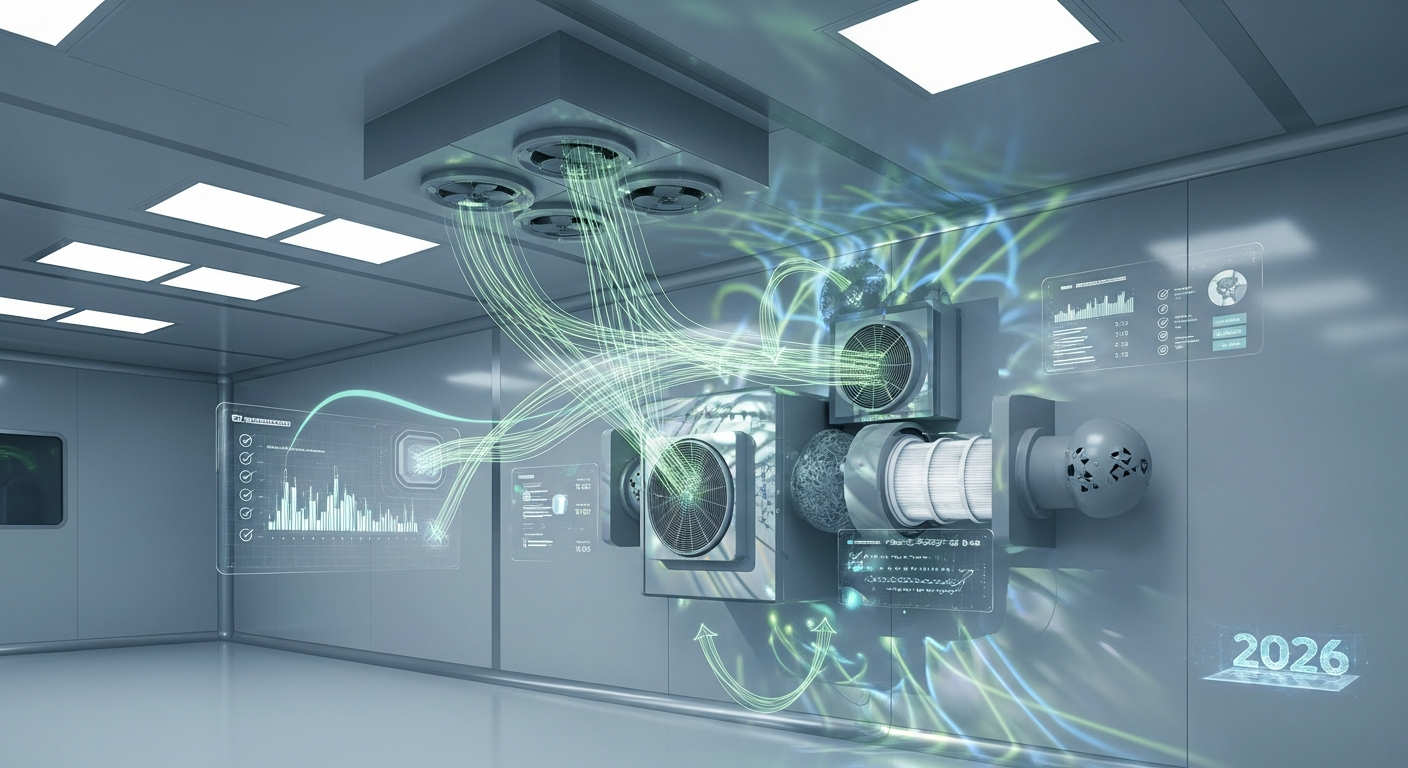
HVAC for pharma is a critical control system ensuring drug safety, efficacy, and sterility, going far beyond basic temperature and humidity control for comfort. In pharmaceutical manufacturing, specialized HVAC systems prevent contamination and cross-contamination, safeguarding product integrity and preventing costly batch failures or regulatory penalties. This ensures every dose produced is pure, potent, and safe for patients, a vital function far exceeding standard building climate control. Consider a new aseptic filling suite for sterile injectables. The facility manager must ensure the HVAC system—handling highly sensitive products and requiring ISO 5 (Grade A) conditions—is designed to maintain precise temperature (±1°C), humidity (±5% RH), and critical air change rates (over 300 ACH), with HEPA filtration and carefully managed pressure differentials to prevent any microbial contamination from adjacent lower-grade areas, all while preparing for a rigorous FDA validation audit.
Pharma HVAC Fundamentals: Beyond Basic Airflow
Pharma HVAC is fundamentally about building and maintaining highly controlled environments, crucial for drug safety and efficacy. Unlike standard systems focused on comfort, pharmaceutical HVAC manages particulate contamination, temperature, humidity, and pressure differentials with extreme accuracy. This precision ensures manufacturing processes meet stringent regulatory rules and protect product integrity from development through final production.
Key HVAC Terms Every Pharma Manager Must Know
Understanding specialized pharma HVAC terminology is essential for effective contamination control and process integrity.
HEPA Filters (High-Efficiency Particulate Air): These filters capture at least 99.97% of airborne particles 0.3 micrometers in diameter, acting as microscopic sieves critical for cleanroom air.
Air Changes Per Hour (ACH): This metric indicates how many times a room's entire air volume is replaced in an hour. Pharmaceutical facilities often require 20 ACH or more to rapidly remove contaminants.
Differential Pressure: This refers to the pressure difference between adjacent areas, typically higher in cleaner zones to ensure air flows outward, preventing contaminant ingress.
Gowning: Refers to the specialized sterile clothing and strict procedures staff must follow before entering cleanroom environments, complementing HVAC controls.
Validation: This is the documented proof that an HVAC system consistently performs as intended and meets all specified pharmaceutical facility requirements.
What Makes Pharmaceutical Manufacturing HVAC Different?
Standard building HVAC systems prioritize comfort, but pharmaceutical manufacturing demands microscopic battlegrounds where even minor environmental shifts can ruin entire batches and pose risks to patients. Pharmaceutical HVAC is built for this high-stakes reality. The industrial HVAC market is projected to grow significantly, with the process industry segment, including pharmaceuticals, valued at billions of dollars, underscoring the economic importance of precise environmental controls. Instruments like TSI VelociCalc Air Velocity Meters are used not just for airflow checks but to verify critical pressure differences, a detail often overlooked in non-pharma settings. Instead of simple thermostats, advanced sensors from providers like I.S.T. offer real-time alerts for ultra-tight controls, such as maintaining ±1% RH.
How Pharma HVAC Ensures Product Integrity and Safety
HVAC systems in pharmaceutical settings act as guardians of product integrity and safety by meticulously controlling airborne particles, contamination, pressure, temperature, and humidity. This rigorous environmental control is vital because even minor deviations can compromise entire batches. Industry data indicates that approximately 30% of recent GMP inspection observations stem from HVAC-related issues, highlighting its critical role.
The Mechanics of Air Handling and Filtration in Pharma
Pharmaceutical HVAC design mandates sophisticated air handling and filtration. HEPA filtration pharma systems are, capturing at least 99.97% of airborne particles 0.3 microns in size. Air Handling Units (AHUs) distribute this purified air at specific rates, measured in air changes per hour (ACH), ensuring a constant supply of clean air. Managing temperature humidity control pharma environments is also core, preventing degradation of sensitive materials and ensuring optimal process conditions.
Maintaining Pressure Cascades for Contamination Control
Contamination control heavily relies on meticulously maintained pressure differentials cleanroom environments. This creates a cascade effect where air flows from higher-pressure to lower-pressure areas, acting like a one-way valve to push contaminants away from critical zones. For instance, a gowning room might be at a higher pressure than the adjacent corridor, ensuring air flows inward when doors open. Industry standards often specify pressure differentials of at least 0.02 to 0.05 inches of water column (″ WC) between adjacent zones. This system, a key aspect of pharmaceutical HVAC design, works synergistically with HEPA filtration to prevent microorganisms and particles from migrating between facility areas.
Navigating Pharma HVAC Regulations: 2026 Standards
Staying compliant with evolving pharma HVAC regulations is non-negotiable for pharmaceutical manufacturing in 2026. Standards like Good Manufacturing Practices (GMP) and FDA requirements mandate strict environmental controls, directly influencing HVAC system design and validation. Non-compliance can lead to product quality issues and severe regulatory findings.
Understanding GMP and FDA Guidelines for HVAC
GMP HVAC compliance fundamentally means proving that pharmaceutical HVAC systems consistently support the required controlled environments pharma. The FDA expects thorough documentation demonstrating that your HVAC setup reliably maintains critical parameters like temperature, humidity, pressure differentials, and air purity. You must validate that your equipment performs precisely as intended, every time. Recent inspection data shows over 30% of GMP observations in sterile pharmaceutical manufacturing are linked to environmental control issues, with HVAC performance frequently cited. Regulators now demand proof of consistent cleanroom condition maintenance as part of a broader validation strategy.
Key Compliance Checkpoints for Pharma HVAC
The regulatory landscape for pharmaceutical validation HVAC requires a proactive approach. As of January 1, 2026, new commercial refrigeration equipment must use A2L or low-GWP refrigerants, driven by regulations like the AIM Act and the F-Gas Regulation. This necessitates specialized training and safety protocols for handling these substances. Modern pharmaceutical cleanroom HVAC design must also align with GMP and ISO 14644 standards for cleanroom classification. HVAC validation itself is a multi-stage process: Installation Qualification (IQ) checks correct setup, Operational Qualification (OQ) tests critical functions, and Performance Qualification (PQ) confirms consistent operation. Periodic requalification ensures ongoing adherence, and integrating digital maintenance checklists with real-time monitoring systems is vital for early issue detection.
Real-World Pharma HVAC: Case Studies and Pitfalls
Establishing HVAC for pharma involves more than initial installation; it requires long-term planning for compliance and smooth operation. Prioritizing validation and ongoing maintenance from the outset is crucial. Many facilities invest heavily in the build but neglect ongoing system management, leading to future compliance issues.
Case Study: Successful HVAC Implementation in Biologics Production
A leading biologics manufacturer implemented a high-reliability HVAC system for its aseptic filling suites, featuring:
Redundant AHUs: Ensured continuous operation even during maintenance, preventing costly batch losses.
HEPA Filtration: Multi-stage filtration, including terminal HEPA units, achieved ISO 5 (Grade A) air quality, critical for preventing microbial contamination.
Pressure Differentials: Carefully designed and monitored pressure levels between rooms controlled airborne contaminants and maintained specific airflow direction.
Automated Environmental Monitoring: Real-time sensors tracked temperature, humidity, and pressure, triggering alarms for any deviations, supporting high-stakes production.
Common Pharma HVAC Mistakes and How to Avoid Them
Several common pharma HVAC issues can derail even the best plans. A significant one is skipping HVAC validation pharma steps, viewing it as a one-time check rather than a continuous process.
Inadequate Filtration: Using filters not rated for the required ISO class risks contamination. Always select filters based on proven performance for your cleanroom classification.
Ignoring Airflow Dynamics: Poor diffuser placement or room design can create dead spots or turbulence, disrupting air changes per hour (ACPH) and allowing particle or microbial spread. Computational Fluid Dynamics (CFD) modeling can predict and optimize airflow patterns before installation.
Neglecting Maintenance: Failure to perform regular filter changes, coil cleaning, and sensor calibration leads to system degradation and non-compliance. Documented, scheduled maintenance is essential.
Poor Change Management: Failing to assess HVAC impact before facility or process changes can cause significant problems. All major modifications require a formal review and potential re-validation.
Debunking Pharma HVAC Myths
Pharmaceutical HVAC systems are sophisticated environmental controls essential for product safety and regulatory compliance, not merely comfort systems. The biggest mistake is viewing a 'cleanroom' as solely about filters; it's a holistic environment where HVAC acts as a hidden protector.
Myth vs. Reality: Cleanroom Air Changes
A common misconception is that more air changes per hour (ACH) automatically guarantee a cleaner room. While high ACH is often necessary, it doesn't ensure air quality alone. An ISO 5 cleanroom, vital for aseptic production, requires unidirectional airflow and HEPA filtration. This means air moves at specific speeds (0.36–0.54 m/s) to push particles directly away from sensitive areas, not just dilute them. Simply increasing ACH without optimizing airflow can be inefficient and costly. Regulators recognize this, as environmental control issues, often HVAC-related, account for over 30% of GMP observations in sterile manufacturing.
Myth vs. Reality: HVAC Cost vs. Product Risk
Avoiding the initial cost of specialized pharma HVAC systems is shortsighted, significantly underestimating the risks to product quality and patient safety. HVAC validation, mandated by GMP, is a rigorous process (IQ, OQ, PQ) ensuring reliable maintenance of critical settings like temperature (±1°C), humidity (±5% RH), and pressure differences (10-15 Pa) between zones. These controls prevent cross-contamination, protect sterile spaces, and ensure batch consistency. Failing to invest in compliant HVAC can lead to recalls or shutdowns, far exceeding the initial system investment. When considering the cost of a single failed batch, often millions of dollars, pharma HVAC costs are a critical risk management strategy.
Your Pharma HVAC Questions Answered
This section provides direct answers to essential HVAC for pharma questions, offering actionable insights.
What are the key requirements for pharmaceutical HVAC?
Pharma HVAC requires stringent control over temperature, humidity, and air pressure to prevent contamination and ensure product integrity. High-level air filtration, typically using HEPA filters, is also essential. These systems are designed for compliance and preventing batch failures, not just occupant comfort.
What is the difference between HVAC for pharmaceutical and general buildings?
General building HVAC focuses on occupant comfort. Pharmaceutical HVAC, conversely, operates under much stricter demands for sterile environments, controlled air changes per hour (ACH) to prevent cross-contamination, and precise pressure differences between rooms to protect products and patient safety.
What are the main components of a pharmaceutical HVAC system?
Key components include Air Handling Units (AHUs) for filtering and conditioning air; multi-stage filtration systems with HEPA/ULPA filters; specialized ductwork designed for smooth airflow and easy cleaning; sophisticated Building Management Systems (BMS) for real-time monitoring and control; and exhaust systems for critical area air removal.
How is HVAC validated in pharmaceutical facilities?
HVAC validation in pharma facilities is a rigorous, documented process proving the system consistently performs as intended and meets all specified requirements and HVAC standards pharma dictates. This includes Installation Qualification (IQ), Operational Qualification (OQ), and Performance Qualification (PQ) to confirm proper installation, functionality, and reliable operation.
Key Takeaways
Tight Control is Critical: Pharma HVAC systems meticulously control air quality, pressure, and humidity to safeguard sensitive products and patient well-being.
Regulations Are: Strict adherence to HVAC standards from bodies like the FDA and EMA is mandatory to avoid costly shutdowns and market access issues.
Early Collaboration is Key: Effective pharma HVAC systems result from collaboration between HVAC engineers, architects, and process specialists from the project's inception.
Energy Efficiency is Achievable: Advanced controls and heat recovery can optimize pharma HVAC systems for energy efficiency without compromising performance.
Cleanrooms Demand Specialization: Pharma cleanroom HVAC requires precise airflow, filtration, and pressure differences to meet ISO classifications and prevent contamination.
Data Proves Compliance: strong monitoring and data logging for HVAC settings are essential to demonstrate compliance and ensure process consistency.
Frequently Asked Questions
What are the main goals of HVAC for pharma facilities?
The primary goals are maintaining precise environmental control for product integrity and patient safety by managing temperature, humidity, air pressure, and air purity to meet strict regulatory standards, while also preventing cross-contamination.
Why is HVAC design for pharmaceuticals so complex?
Complexity arises from the need to meet strict FDA/EMA regulations for controlled environments, build validated cleanrooms, and prevent contamination in sensitive manufacturing processes, all while considering the scale and product sensitivity.
What are the key HVAC standards pharma facilities must follow?
Key standards include ASHRAE Standard 170 for Ventilation of Health Care Facilities and Good Manufacturing Practices (GMP) from regulatory bodies like the FDA, specifying requirements for air filtration, air changes per hour, pressure differences, and temperature/humidity ranges.
How does pharmaceutical HVAC differ from standard commercial HVAC?
Pharma HVAC demands much tighter control over air quality, temperature, humidity, and pressure for sterile conditions and contaminant prevention, often using advanced HEPA/ULPA filtration and separate air handling units, unlike standard commercial HVAC focused on general comfort.
What role does HVAC play in ensuring regulatory compliance in pharma?
Validated HVAC systems prove that controlled environments pharma facilities create are suitable for product manufacturing. Issues with temperature, humidity, or air purity can lead to batch failures and regulatory actions, making HVAC design and monitoring critical for compliance.
The Bottom Line
Mastering HVAC for pharma in 2026 requires strategically integrating design with strict compliance, building systems that protect product integrity and patient safety while boosting operational efficiency. Review your current HVAC validation documentation and identify one area where you can proactively improve system performance beyond current regulatory expectations. This proactive approach is critical for future-proofing your facility.